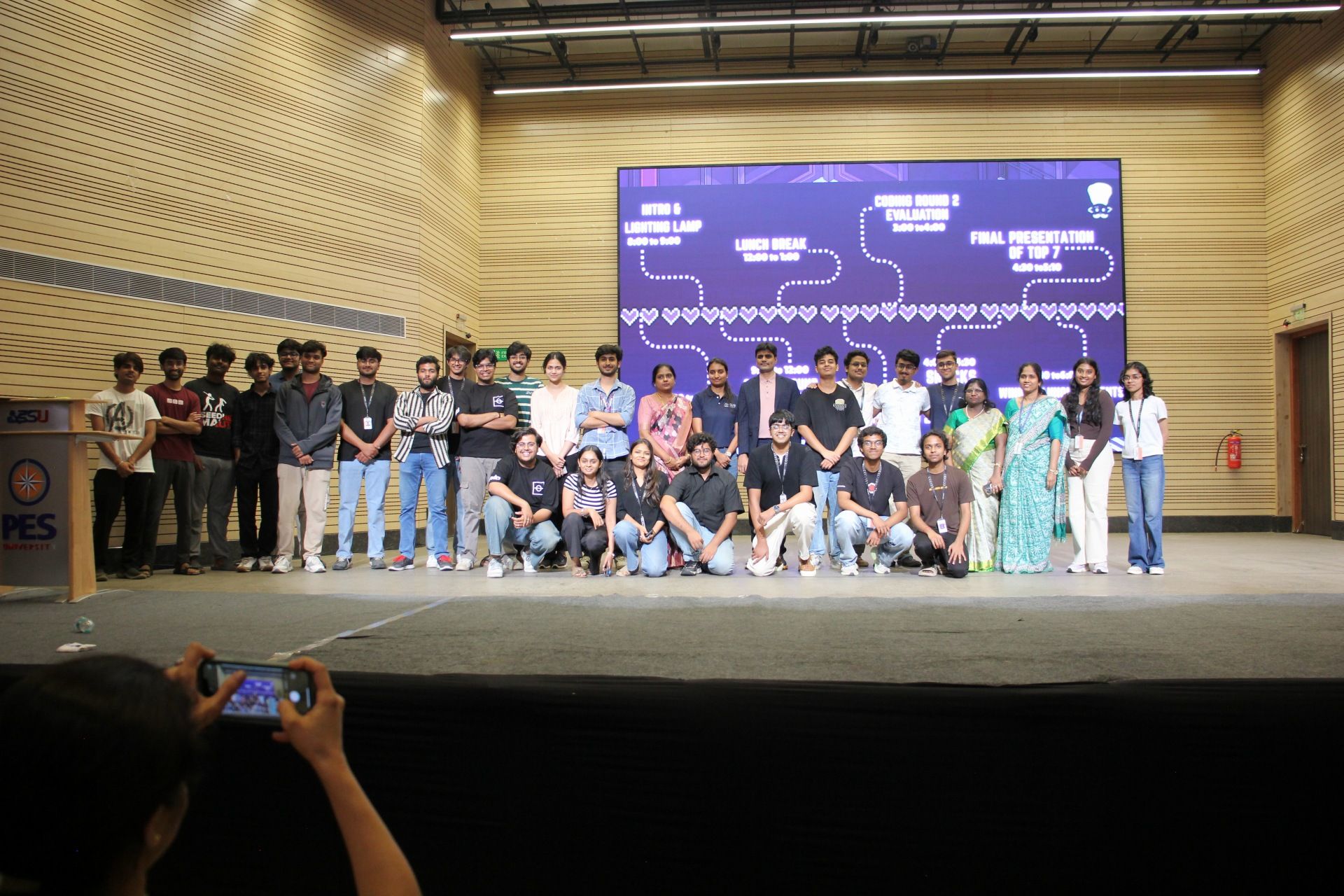
Praxis Hackathon
A high-intensity hackathon designed around rapid experimentation, AI-assisted development, and end-to-end product building. Participants work under real-world constraints to transform ideas into functional prototypes, using modern AI tools and engineering practices to design, build, test, and present technical solutions within a focused sprint.
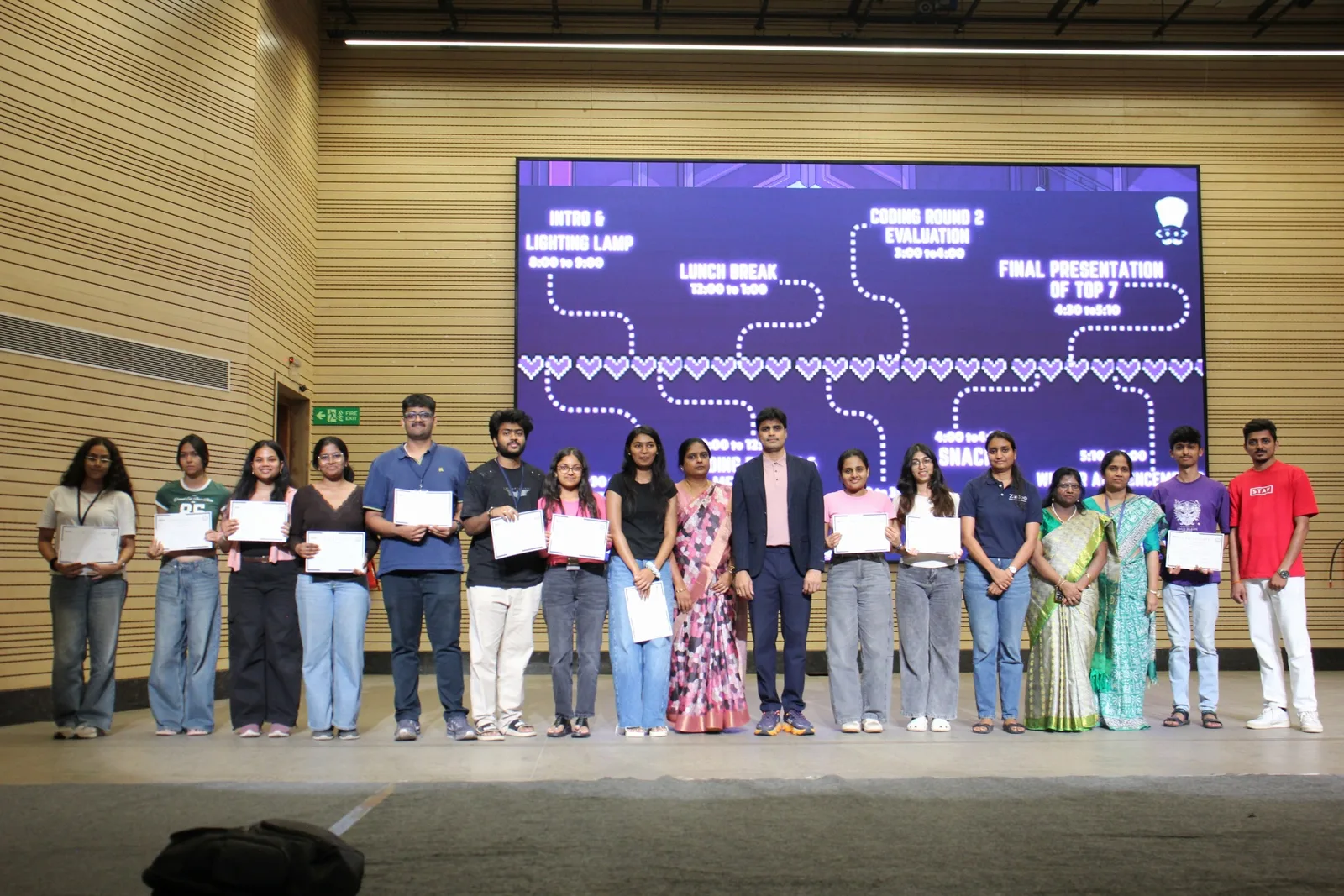
Hall Of Fame
Praxis Hackathon • Visual Archive
About Praxis
Praxis is the official hackathon conducted by CodeChef PESU ECC.
The event gives participants a problem statement based on real-life challenges. Teams then work on building solutions to these problems, with Artificial Intelligence and Machine Learning (AI/ML) serving as the backbone of their approach.
What Is Praxis?
Praxis is centered around turning ideas into working solutions.
Participants are presented with problem statements that have an intersection between real-world problems and AI/ML. The objective is not simply to build a prototype, but to think about how AI/ML can be used as a core part of solving the problem.
The hackathon gives participants an environment where they can take a problem, explore possible approaches, build a solution, and turn their ideas into something tangible.
The Problem Statements
The foundation of Praxis is its problem statements.
Each problem is designed around a real-life challenge and requires participants to think beyond conventional solutions. Teams need to understand the problem, identify where AI/ML can add value, and develop a solution around that intersection.
This makes the hackathon as much about understanding the problem as it is about building the technology.
AI/ML as the Backbone
A central idea behind Praxis is using AI/ML as a backbone for solving problems.
Rather than treating AI/ML as an isolated feature added at the end of a project, participants explore how it can contribute to the core solution.
This encourages teams to think about:
- How AI/ML can address the underlying problem
- Where intelligent systems can improve an existing process
- How a real-world challenge can be translated into a technical solution
- How an idea can be turned into a functional prototype
From Idea to Solution
Praxis is about taking a problem statement and turning it into something that works.
The process involves understanding the challenge, brainstorming possible solutions, selecting an approach, and building a working implementation.
Teams get the opportunity to move through the entire journey from problem → idea → implementation → solution.
Building Under Pressure
As a hackathon, Praxis challenges participants to build within a limited amount of time.
This means teams have to make practical decisions about what to build, how to approach the problem, and where to focus their effort.
The result is an environment that encourages rapid experimentation, collaboration, and execution.
The Goal
The goal of Praxis is to encourage students to approach real-world problems through technology and explore the possibilities of AI/ML as a foundation for building solutions.
It is an opportunity to move beyond simply learning concepts and put them into practice by building something that addresses a meaningful problem.
Event Timeline
The journey and history of Praxis Hackathon.
Registration
Participants arrive and complete the registration process.
Introduction & Lamp Lighting
The event begins with an introduction followed by the traditional lamp lighting ceremony.
Coding Round 1 & Mentoring
Participants begin the first coding round while mentors provide guidance and support throughout the session.
Lunch Break
Participants take a break for lunch.
Coding Round 2
Participants compete in the second coding round and work on the given problem statements.
Coding Round 2 Evaluation
Submissions from the second coding round are evaluated to determine the top-performing teams.
Snacks
Participants take a short break for snacks.
Final Presentation of Top 7
The top seven teams present their final solutions and ideas.
Winner Announcements & Vote of Thanks
The winners are announced, followed by the vote of thanks and closing of the event.
Hall of Fame
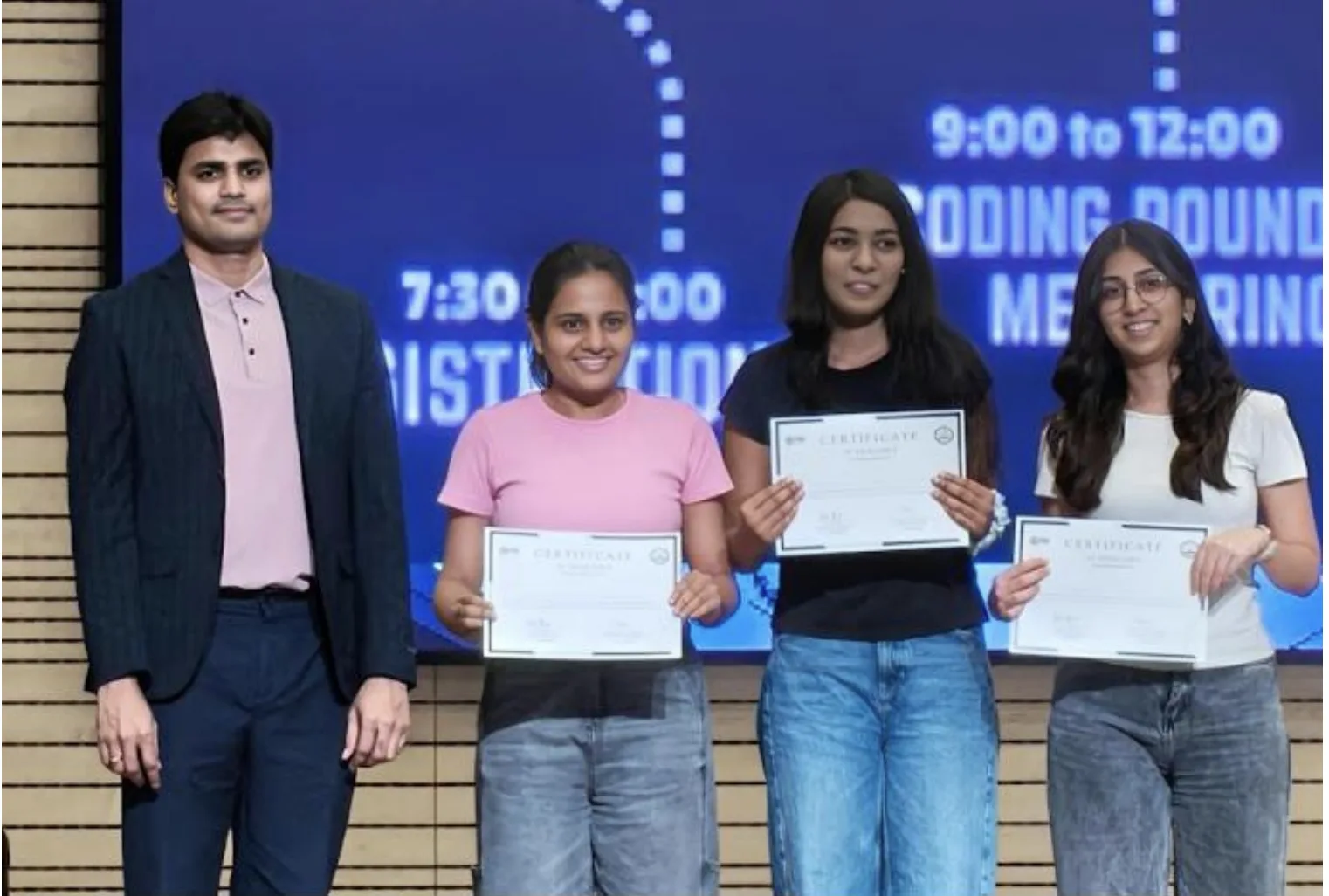
Podium of Champions
The brilliant minds who conquered the arena and etched their names in history.
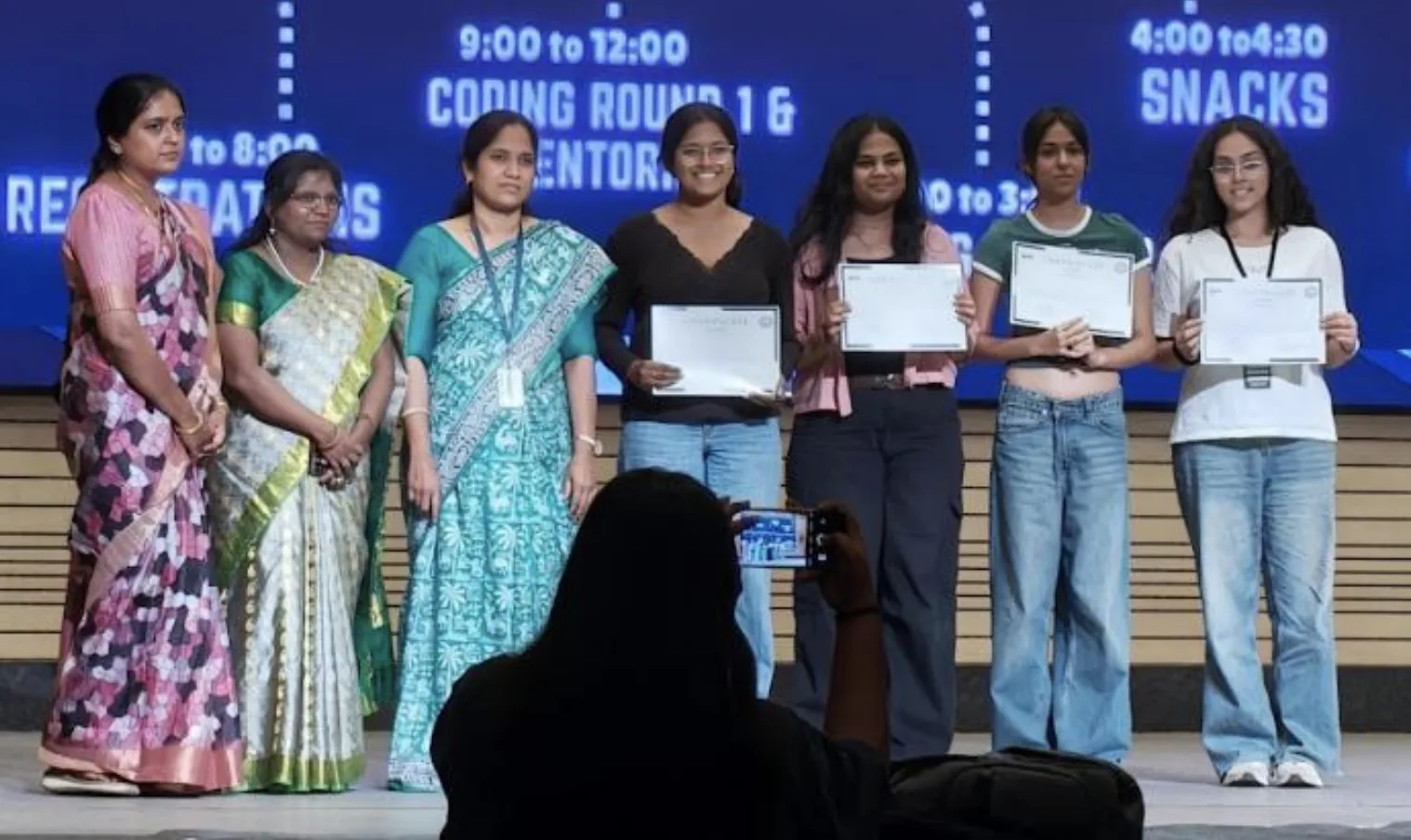
Lawgorithm
"The combination of algorithmic thinking and sprinting across campus was unparalleled. We spent 20 minutes debugging Dijkstra while physically standing in the rain at the final checkpoint. It pushed us to our absolute limits!"
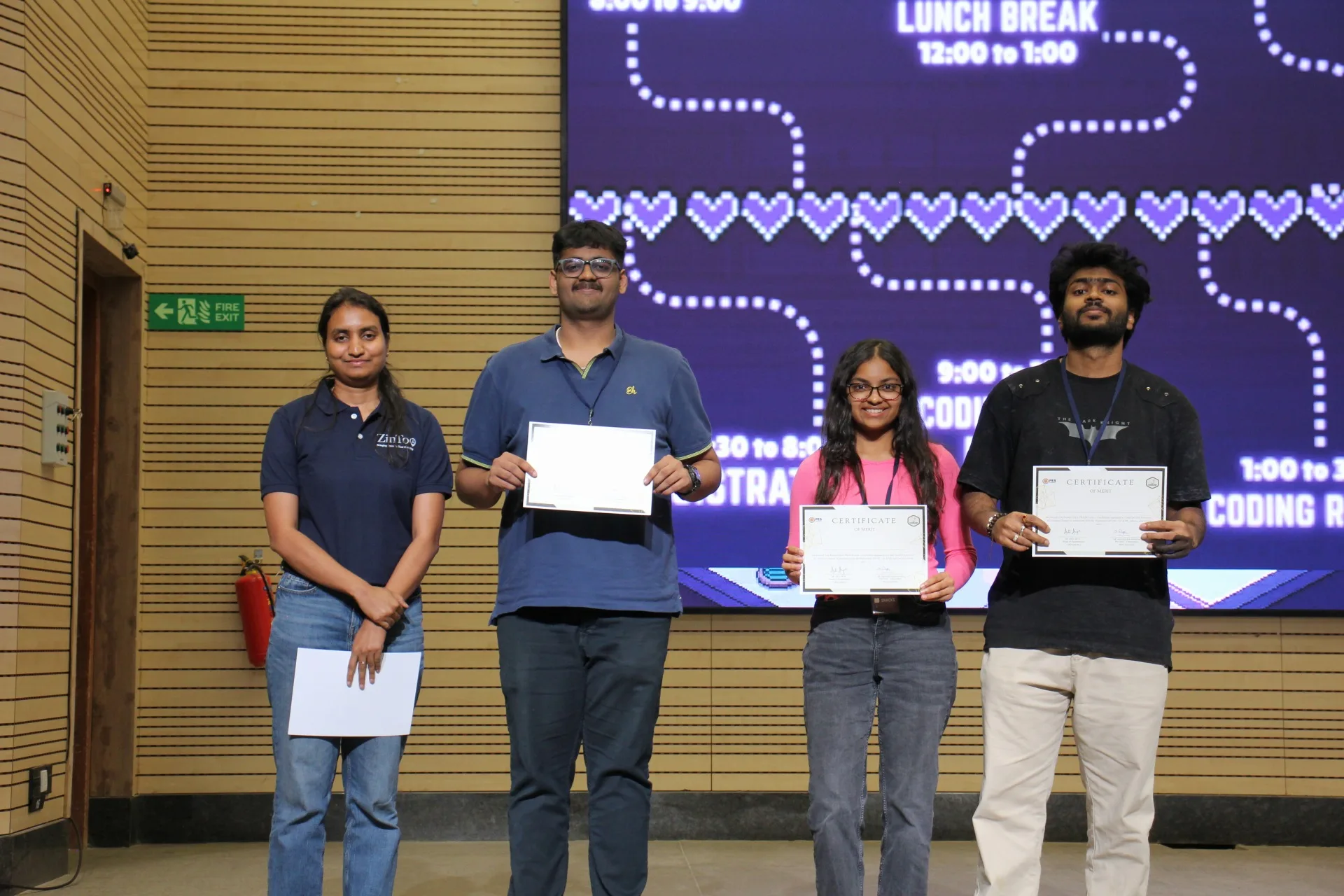
sem4back
"We lost our lead because we forgot a semicolon in the cryptography round, but making up the time during the campus sprint was thrilling."
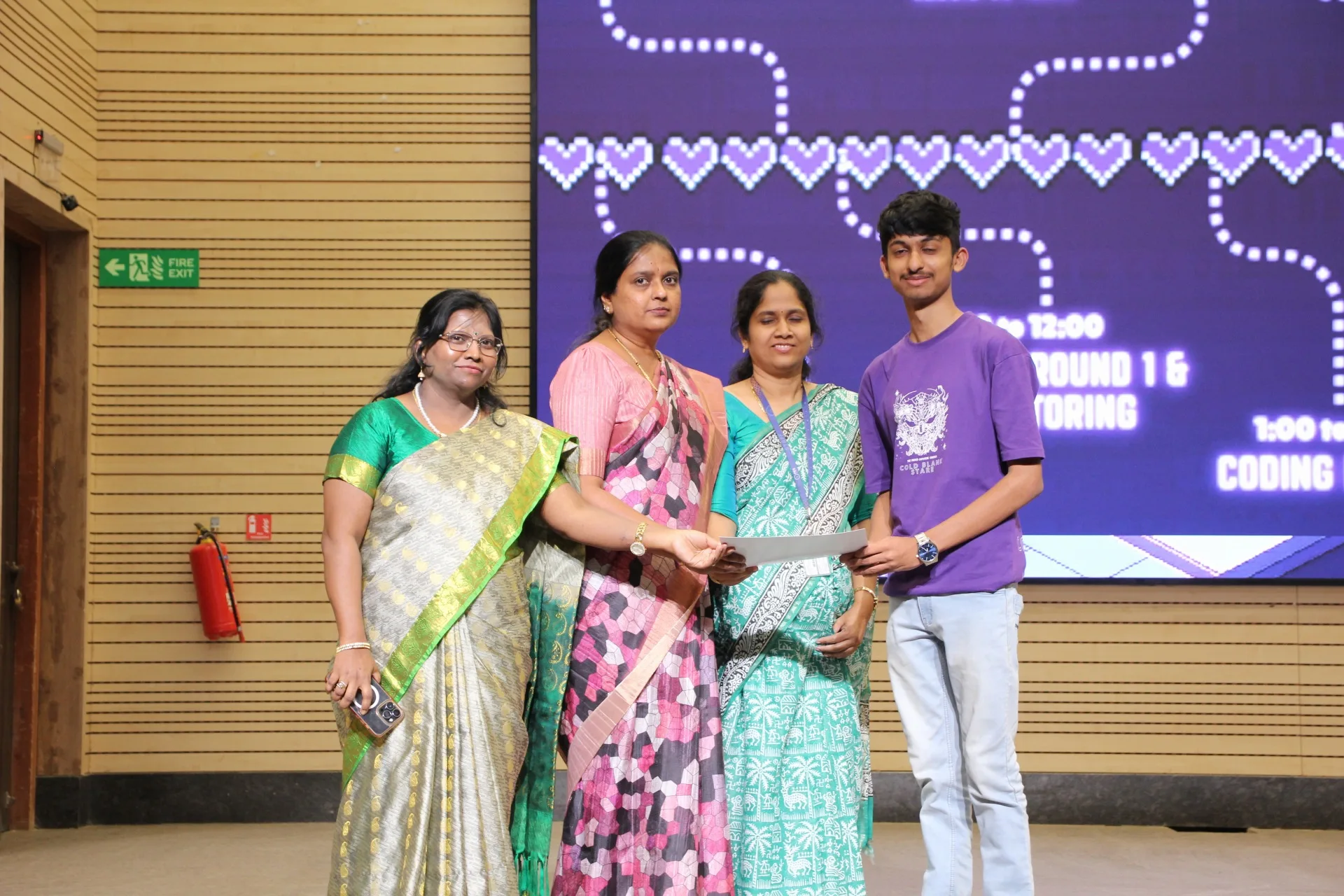
bazooka
"Getting onto the podium was incredible. The hardware node reverse engineering completely blew our minds. Best event of the year!"
SingleThread
"We lost our lead because we forgot a semicolon in the cryptography round, but making up the time during the campus sprint was thrilling."